Powered By Blogger

Sunday, September 10, 2017

The Opioid Epidemic and Keeping it Real


Not many are black people; now it becomes important to society.
"They were in a small city in a rural county, fertile ground for prescription drug addiction, though they traveled from as far as Nashville and Missouri. They were young or middle-aged and ranged from blue-collar workers to businesspeople. They said painkillers prescribed after accidents or injuries paved the way to their dependence on opioids. They also were all white. Of all deaths in 2015 from opioid and heroin overdoses in Tennessee and nationwide, about 90 percent of the people were white. Black people accounted for little more than 6 percent in Tennessee and 8 percent across the country, according to U.S. Centers for Disease Control and Prevention data.Among African-Americans critical of the modern drug war launched four decades ago by President Richard Nixon, the fact that the opioid epidemic is primarily striking the majority race helps explain why it is largely being called an epidemic and treated as a public health crisis, rather than a war." From: Largely White Opioid Epidemic Highlights Black Frustration.

by Don Allen, M.A. Ed./MAT (response)
          People say there are many versions of the United States; Black, White, Red, and Yellow.
Don Allen, M.A. Ed.  - Teacher/Researcher
and Editorial Columnist 
From these many versions, no matter who you are, you can see that some are treated with less attention to generational challenges. I'm not trash-talking, nor whining, but let's face the facts; when an epidemic like Opioid misuse dug in and stayed with Black, Yellow, and Red versions, there was no outcry for help. The people in the mainstream just looked the other way, opened up treatment centers (multicultural disparities are a billion-dollar enterprise), and walked away wealthy from multi-version pain. 
          Now the Opioid epidemic has enveloped the White version of the United States killing children of well-off, poor and middle-class. Like the sun rising in the morning, all attention is now focused on saving "one version" when for generations the other versions have suffered catastrophic losses. 
          As a teacher, if I cannot present our world within a timely and relevant, and factual lens, our students do not benefit. I will not teach Black History because in reality its American History. Black people did not begin their journey in slavery, so while this topic is relevant, I know many black historical figures that invented thousands of machines, processes and guided many with words printed in some of the finest books ever. Once we decide to keep it real, Achievement Gaps disappear; crime rates drop; unemployment becomes a memory of a time long ago, and our families become reunited with the ideal that integrity, respect, politeness and love have always been the utility for us as people to make the world go around. Remember, we need each other; I need you, you need me...we cannot survive in any other construct no matter how far apart the differences might be.

Wednesday, August 24, 2016

Part 1: North Minneapolis: Bloody Puddles | Black Fiction

The murder scene of Tabyis Paskins (8.3.16). Photo: fightthepowerjournal.com
On Wednesday, August 3, 2016 a 19-year-old named Tabyis Paskins was gunned down on his bike in a senseless but common act of youth violence in north Minneapolis. As his mother grieved for her son at a vigil late Wednesday of Penn Avenue North and 25th, I wondered about Tabyis and the life he might have. I dedicated to all of the children who have lost their life in Minneapolis’ White Lie. This piece is written as if Tabyis is talking to us…

Fiction by Don Allen

…It was supposed to be an nice summer morning; the buses running down Penn, the fine ladies heading to work downtown, and us waiting for the liquor store to open  – hanging out with my boys, hitting the blunt and riding around the neighborhood. Ain’t none of us got no jobs, that’s why we’s got to hustle. Mom’s moved us up here from Peoria, Ill. She said we needed a fresh start – away from all the bullshit in Peoria. I wasn’t going to school anyway – that shit is whack; them white teachers don’t care about no niggers. In the “Mini,” was all about hanging with my boys around here and in the “Paul,” - the ones who got my back, not them turncoats who can’t smoke the African bush, or puff the Ace…Mok gets too high and was pushing up on Clyde’s sister in the basement. Pop’s came down and Mok tried to fight him…we can’t hang there anymore.

Wednesday morning should have been easy; we were going after this mark. It was an easy score; Mok, Clyde and me could make some quick loot.


It’s not that hard for things to go wrong; it happens a lot over north. Last week my boys got shot at by a bunch of different niggas. Didn’t none of them die, but damn, they shot at them right in front of they mom’s crib; that’s ratchet cuz. If you got heat with one of your boys, you ain’t ‘pose to try and shot him and his mom’s.

Coming up - Part 2: My Environment 

Thursday, August 13, 2015

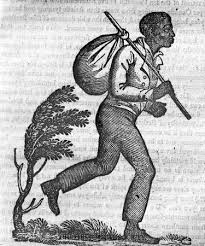
Slave in Space: The Story of Apollo Jefferson, the slave who ran…

Apollo Jefferson ran...
It’s the Year of our Lord 1820 in the Deep South. South Carolina announces penalties for introducing any written anti-slavery material into the state. The white-male led government feels slavery is a way of life in the south; they feel as if it is the right thing to do. Plantation owners take their slaves to market, breaking up families, mother taken away from children; wife’s separated from husband, and regrettably, father’s removed from sons. This is the story of Apollo Jefferson and the beginning chapter of “Slaves in Space: The Story of Apollo Jefferson,” the slave who ran…

By Don Allen, Author – Slaves in Space, Chapter 1: Hell

My heart was racing, the sun in the sky felt like hot lava, my chest burned, my vision blurred, and I truthfully felt as if I'd died long ago. Despite this however, my legs continued to carry me through the woods, as far away from that godforsaken plantation as possible. I willed myself to keep running, it would be worth this pain just to never have to hear the word “boy” again. I’m not a boy, I'm a man, and I, all of us, deserve more than working ourselves to death in those atrocious cotton plantations. Just a few more yards I told myself, just a few more yards and then I’ll rest, and rest I did. My eyes grew heavy, sweat poured down my face but I didn't care, I closed my eyes and slipped into a deep sleep, or perhaps even a coma, either way I didn’t care...

I awoke what I presumed was several hours later; I knew this as it was now dark. Despite this however, there were no stars in the sky, in fact, I could barely see a thing, and what’s more, it felt as if I was laying on a sheet of metal. I panicked, something wasn't right, I wasn't in the woods underneath that tree anymore, I was somewhere else, somewhere metallic. Had I been caught? No, I would have awakened, surely? I got to my feet, made my way to what looked like a dim crimson red due, perhaps a light, which was shining under what must have been a door. I made my way through the darkness to what I hoped was the door, fumbled around on the wall, and found some form of switch. A sudden THUD echoed throughout the room, the huge door lifted effortlessly, and the entire room was bathed in a deep red. I saw where I was, and what I saw made my blood turn to ice.

Cages after cages, filled with people just like me, and when I say just like me, I mean slaves, I recognised half of them from the plantation I’d spent the summer on. I recognised one lady, Bet, a sweet girl, and called out to her “Bet, bet, can you hear me”. She slowly turned to me, looked me right in the face, yet somehow she seemed different. Her eyes were vacant, almost dead, glazed over, like a dead fish. “Bet, what’s going on”? Nothing, not a word. I made my way down the lines of cages littering the entire room, and with each cage I encountered, I grew more and more terrified. Some faces I recognized, some I didn’t, and some faces, not even their own parents would recognize. They were contorted in agony, their skin, once dark, was now silver, and the eyes were as white as snow, as white as those devils that forced us to work ourselves to death on the plantations.

I was now petrified, these things in front of me weren’t human, they were demons, devils, perhaps I’d died and was in hell? It would explain the crimson hue washing over this room, and the near unbearable heat. I was snapped out of my god-awful train of thought by a clinking noise, nothing too loud, but loud enough for it to make my hair stand on end. “Who’s there”? I called out, yet immediately wished I hadn’t when I received my reply. There was no voice, instead, a blood curdling gargling shrieking sound. Out from the darkness and into the crimson light stepped a creature, the likes of which I’d never seen before. Even hunched over, it was taller than any person could ever be, its face was more beast than man, its skin, silver and glistening, and it was looking right at me. I slowly backed towards the exit but with one blood-curdling shriek, it raced towards me, faster than any animal I’d ever seen before in my life.


It was at that moment that I knew I was done for...

Friday, April 3, 2015

What is Postmodernism? Capitalism and Schizophrenia

By Don Allen
Really...what did happen?


I have differed musings about this book. From one perspective I admire it’s bring down of Freud and its elucidation of how individuals are made to yearning remorseless administrations. Maybe its to their superbness, alongside that of other postmodern savants, that their musings no more appear earth-shaking, yet I additionally feel that their hypotheses are not exceptionally valuable on a practical level, particularly when wearing such pretentious dialect.

A most critical work in the improvement of genuine hypothesis in the late twentieth century,
Anti-Oedipus is an essential content for social researchers, legendary scholars, women's activists,
savants, and others inspired by the issues of breakthrough Western traditions.

In his prelude, Michel Foucault calls Anti-Oedipus a starting to non-rightist life, alluding to
 political oppression as well as to the autocracy inside us-the longing to be driven. Identify with that
issue, Deleuze and Guattari set forward a political investigation of yearning as it is communicated or
stifled in Western traditions. They find the seeds of society's ailment in contemporary therapy -
especially in the prevailing figure of Oedipus.

Deleuze and Guattari see machines all over. The body, the earth, craving, everything techniques
as a machine. In the same light, they announce, "Everything is production”. Nothing is ever done
delivering. Sustenance, a PC, a spoon, everything is generation as it keeps on creating and is attached
up to different machines that keep on delivering. Regardless, only in light of the fact that nothing is
ever done creating does not imply that nothing is ever delivered. It is critical to note that "Something is
created: the impacts of a machine, not simply allegories". Items exist yet just as makers. Besides,
"creation is quickly utilization and a recording procedure”. The qualification in the middle of creation
and utilization – and the procedure that records those – is caved in by the commonness of generation
in both utilization and recording.

The book is sorted out into four sections. The first is presentation that, accepting that Anti-
Oedipus is a kind of machine, depicts "what it can do and how it functions”. The second is an
investigation of the thought of "wanting generation" which arranges this inside an "inner" study of
Oedipus. This is trailed by a third part, which portrays the "outer" scrutinize of Oedipus and its
relating idea of "social-creation." A fourth section finishes up the book by looking at conceivably
 productive utilizations of schizoanalysis inside territories of hypothetical and political activism, for
example, Marxism, woman's rights and environmentalism. All through, painstakingly points of interest the relations in the middle of Deleuze and Guattari's book and its different hypothetical antecedents, including (among others) Marcuse, Reich, Weber, Adorno, Lukács, Klein, Lévi-Strauss and Lacan. The principal section specifically is concerned to position Anti-Oedipus in a custom of "supernatural."

The second and third parts involve examinations, clarifying - in genuine Kantian style - the three
"blends" of the oblivious, the "paralogisms" of analysis (the illegitimate employments of these three
unions), and the social developments, which generally compare to the recorded advancement of
Oedipus (brutality, oppression, and private enterprise). The focal subjects investigated here
incorporate thoughts of generation and hostile to creation, the "body-without-organs" as a format for
wanting creation, frameworks of (political and phonetic) representation and engraving, and the
generally changing character of the "socius," together with the different ventures of longing (social
and psychic) that constitute it. While these sections are entirely explicatory, the fourth and last section, entitled "Past Critique: Schizoanalysis and all inclusive history," endeavors to orchestrate Deleuze and Guattari's bits of knowledge and apply them to the fields of contemporary political and hypothetical verbal confront.

Saturday, March 21, 2015

Analyzing Hortense Spillers "Mama’s Baby, Papa’s Maybe" and the New Black

For those outside of reality, coonery exists as a tight fitting hat. 

By Don Allen

Hortense Spillers, “Mama’s Baby, Papa’s Maybe,” becomes more timely and relevant in 2015 than ever before with the talk about the New Black. Hip Hop music artist Pharrell, interviewed by Oprah said,  "The New Black doesn't blame other races for our issues.” Then, one of the world's most successful musicians, said to Oprah, the billionaire queen of the world. "The New Black dreams and realizes that it's not pigmentation: it's a mentality and it's either going to work for you or it's going to work against you. And you've got to pick the side you're going to be on."

Phar. and Common become extremely embarrassing to
the plain black American; never new, alway here.
Pharrell lays bare huge blind spots in his cognitive thinking of picking the side you are going to be. Choice and the operant construction of race, in step with severe structural violence for those who do not have it like the Pharrell (money, fame, women and prestige), is the spectacle for those on the outside looking in can only dream of obtaining, which makes Pharrell’s statements about the New Black even more arguable.  Pharrell's comments are ultimately folly to people who do not fit in with his narrow ideas. He misses the point that “black outsiders” exist. 

Spillers thoughts on the erasure of blackness, as it “inscribe[s] ‘ethnicity’ as a scene of negation,” through the construction of a binary opposition between “white” (or normalized American) and “black” family structures is a point that must be considered as fact.  In the analysis of any blind extension of blackness, we (scholars) must address statements from the people who perpetrate unoccupied materialism as a platform for the most absurd rhetoric.

In Spillers feminist-focused argument, the road of identification is shrouded and unclear: To her point, we (Blacks), are not in control of our identity, but assigned to an infrastructure by historical placement. “Embedded in a bizarre axiological ground, they demonstrate a sort of telegraphic coding; they are markers so loaded with mythical prepossession that there is no easy way for the agents buried beneath them to come clean.  In that regard, the names by which I am called in the public place render an example of signifying property plus.  In order for me to speak a truer word concerning myself, I must strip down through layers of attenuated meanings, made in excess over time, assigned by a particular historical order, and there await whatever marvels of my own inventiveness,” (67).

Rapper/actor Common fell into the same trap as Pharrell, while discussing the legacy of the 1960s Civil Rights Movement and the current tensions in an interview with John Stewart. Common said, “We all know there’s been some bad history in our country. We know that racism exists,” the star conceded, before adding, “I’m…extending a hand. In addition, I think many generations and different cultures are saying ‘Hey, we want to get past this. We have been bullied and we have been beat down, but we do not want it anymore. We’re not extending a fist and saying, ‘Hey, you did us wrong.’ It is more like ‘Hey, I am extending my hand in love. Let us forget about the past as much as we can, and let us move from where we are now. How can we help each other? Can you try to help us because we’re going to help ourselves, too.’ That’s really where we are right now.”

Again, Common presents a gaping blind spot in not understanding America is fixed. We can access Spillers and her argument in reflecting back on its major points.  It leaves us with the challenging supposition that maybe the ways in which historically gender and race has been configured for black men and women through slavery and its aftermath will always be a part of the constructed identity by the dominant white patriarchal structure. We (Blacks) sit outside of a dominant “American grammar.”

The so-called legitimacy of white, normative gender constructions as potentially radical ways of re-conceptualizing what it means to be a man or woman, black or white, rather than banishing the “illegitimacy” of black family structures as lacking something fundamentally in the American landscape.

Works Cited

        Spillers, Hortense J. "Mama's Baby, Papa's Maybe: An American Grammar Book." Diacritics 17.2 (1987): 64-81. Print.

References

Stewart, John. “The John Stewart Show”. 2015.


Winfrey, Oprah. “The Oprah Show”. 2015.